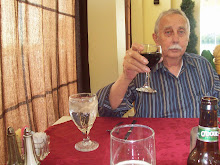
Saturday, November 27, 2010

Why Asimov's Three Laws Won't Work

In Science Fiction, the Three Laws of Robotics are a set of three rules written by Isaac Asimov, which most robots that appear in his fiction must obey. Introduced in his 1942 short story "Runaround," the Laws state the following:

A robot may not harm a human being, or, through inaction, allow a human being to come to harm.

A robot must obey the orders given to it by human beings except where such orders would conflict with the First Law.

A robot must protect its own existence, as long as such protection does not conflict with the First or Second Law.

If we could actually build robots who are intelligent enough to be self-aware, would these laws actually make sense. I propose not. Take the first law. In the first place, how could the robot tell a human being from another robot that looked like a human being or from a hologram of a human being. You might say, so what. As long as the robot cannot harm a human being or anything that resembles a human being, that is all to the good. But what if a humanoid robot or hologram and a real human being are both in danger. How would the robot know which one to save? As far as that goes, if two human beings are in danger at the same time, how does a robot know which one to save. (Note: this exact situation is shown in the movie I, Robot. In the movie the robot made the wrong choice.)

For certain uses, a manufacturer would not want to apply the Laws in that order. For example, suppose the robots are to be used for military purposes. In this case, the Laws built into the robot might go something like this:

A robot must obey the orders given to it by his superior officer.

A robot must protect its own existence, and those of other soldier robot, except where such orders conflict with the First Law.

A robot may only harm those human beings or robots designated as "The Enemy," by its superior officer and only if not under a flag of truce, surrendering or designated as "Prisoners of War."

In my novel, The Isaac Project, the situation of the military wanting to change the Three Laws provides part of the conflict in the book.

One error that Isaac Asimov made was that he assumed that the intelligence of the robot would somehow be in its electronic circuitry. Actually, we know now that the intelligence of a robot would more likely be in its software. This changes the situation quite a bit, since software can have errors in it that are not always detected during testing. Also, it can be modified. Depending upon how the software is installed, it might be subjected to viruses, worms, and other sorts of malicious software tricks by unscrupulous hackers, such as our computers are now.

Thursday, November 13, 2008

New group for writers and readers of science fiction

Some of you who read my blog may be authors or readers of science fiction, fantasy, paranormal fiction and/or dark fiction. I have started a group for authors and readers of these genres. Authors may promote their works at any time. Readers will find what's new in these genres and may comment on the books they've read or post anything having to do with these genres. To get started, click here

Sunday, November 9, 2008

The Invisible Minority

With the election of an African-American president, a women as a vice-presidential candidates, and another almost achieving the presidential candidacy, it would seem as though bigotry and prejudice were on the wane However, it is not dead by a long shot. In California a referendum against gay marriage was passed. Since 9/11 and the Iraq and Afghanistan wars, Moslems (and even Hindus) have suffered from bigotry. Bigots against many groups still exist.

Nonetheless, there are minority groups that suffer extreme prejudice that are not usually mentioned even by the so-called enlightened press except in a derogatory way. What groups am I talking about? Atheists, agnostics, the simply non-religious and pagans. In what ways are we non-believers in an almighty god discriminated against? Well let's take the sentence I have just written, by convention, the word "god" since it refers to the god of Christians and Jews is usually capitalized as though their god was somehow better or more important than other gods. If I would have referred to a pagan or Hindu god, it would not be capitalized.

One of the big ways that we non-believers are put upon is that we, as a group, are not allowed to be elected to public office. Oh, there is no law that states specifically that an avowed atheist or agnostic cannot run. But in every election, there is a litmus test. "Does the candidate believe in God?" is a question that is always asked. If the answer is no, the candidate has no chance in hell of being elected. In this last election, Senator Dole aired a TV ad that accused her opponent, Hagan, of taking "godless money" at a Boston fund raiser and linked her to an atheist group called the Godless Americans political action committee. The ad ended with a picture of Hagan and a woman's voice over saying, "There is no God." Hagan,who is an elder in her Presbyterian church and a former Sunday school teacher, responded with a lawsuit and her own ad, declaring, "I believe in God." The critics of the ad panned it because it was untruthful, not that calling someone an atheist was not derogatory. In fact Hagan is suing Dole as though she had said something really nasty.

What about TV? How many atheists, agnostics, and pagans have you heard being interviewed or otherwise allowed to state their views? Not many. Yet religious leaders such as televangelists, Catholic bishops, and the pope are given a lot of air time. Several cable channels are devoted to religion propaganda, but none devoted to the secular viewpoint. In dramatic shows, when a bad person becomes good, it is because he or she has a religious awakening. If a person loses his or her faith in religion, that person becomes despondent and unhappy and confused until they get their faith back.

It is axiomatic that religious people are good, kind and happy, while the non-religious are evil, cruel and unhappy. Really?! I am an atheist and consider myself good, kind and happy. There is nothing missing from my life as the religious propagandists claim.

The truth is that for all their prattling about love your neighbor, it is the fanatically, and some not so fanatical, religious that preach hate against other religions, gays and other groups. Many wars past and present, including the current ones in the Mideast, have been sparked by religion. In the middle ages, people were tortured and burned at the stake for having dissenting opinion with regard to the prevailing religion.

"One nation under god" is in the pledge of allegiance to the United States. "In god we trust" is on the money we use. Before it was banned, children were required to pray in a public school. Religious groups are working hard to reinstate this. In some public schools, unscientific philosophies such as "creationism" are taught as science.

How about taxation without representation? Priests, ministers, owners of religious property and so forth do not pay taxes, while the non-religious have to take up the slack. Since an atheist is not likely to be elected to public office, this is not about to change any time soon.

Yet there are very few groups working to end this bigotry and discrimination of the non-religious and pagans. We are truly an invisible minority.

Monday, December 3, 2007

Leaders, Do We Need Them

You've probably heard it often enough through your life such remarks as: "What we need is someone who is a leader," "Our program builds leadership," and "He was a great leader." I suppose for people who are not self starters or who cannot operate effectively unless told exactly what to do or are too lazy to put effort into making decisions, a leader is a necessity. But think about it, for most things, the majority of people get along pretty damn well in their daily lives without being told what to do. When organizing a group effort, most of the time people can reach a consensus fairly rapidly.

It seems to me that people who strive for leadership roles are egoists who think that they know better than other people how to run things. There is also the motive of having power over others. In addition, in most societies, leaders are honored and rewarded.

In my view so-called "leaders" do more harm than good. The stronger the leader, the more arbitrary and dictatorial are his or her decisions. Think about some people who were considered great leaders, Napoleon, Hitler, Stalin, Lenin, Ghenghis Khan, Julius Caesar. It is power hungry leaders and their sheeplike followers who make war, order genocide, and oppress people.

Of course many organizations in a modern society are organized hierarchically. I believe this stems from the olden days when emperors, kings and religious leaders who organized according to a military standard. In a hierarchical organization power starts from the top and propagates downward. This gave the power hungry the ability to lord over others. In today's world, this also holds true, although in democratic countries such as our, the leader's drive for absolute power is somewhat tempered by other forces.

But the truth is that most organizations would probably run as smoothly without a leader. It is the much maligned bureaucracy who keep the organization going. When important decisions had to be made, they could be made by experts after due consideration, perhaps in committee.

Thursday, August 30, 2007

New Gas Saving Devices

In a time of soaring gasoline prices, carbon dioxide emission that are causing global warming and calls for less dependence on foreign oil, we need to think about devices that use fewer oil product. I've discovered a few that do not require gasoline, ethenol, hydrogen or fuel made from coal. Most of these devices have the additional advantage that they increase muscle power and aid in reducing unwanted weight. Here they are:
The Engineless Lawn Mower.


Unmotorized Air Conditioner


Gasolineless Snow Thrower


The Leg Powered Transport


Un-Car Grocery Carrier


Gasless Clothes Dryer

Monday, August 27, 2007

Who Is Papa Joe

I call myself Papa Joe. But who is Papa Joe? First I'll give you the bio I usually send to publishers and then expand on that. For more information about my novels and anthologies plus some free stories and serials, go to my web site at http://papajoesfantasticworld.com

I've loved science fiction and fantasy from the time I learned to read. My hobbies, besides writing, are traveling, adventure game playing and do-it-yourself projects. Before I retired, I was a technical writer at a major computer manufacturer. Several short stories of mine have been published in E-zines, and I've sold a series of dark fantasy novels called The Morgaine Chronicles to Renaissance E Books. These novels may be purchase from Renaissance's Page Turner Editions, http://pageturnereditions.com or at Fictionwise E-Books http://www.fictionwise.com . Renaissance has also published three collections of my short stories, The Sands of Time, Mordrake's Apprentice, and Hearts Among the Stars: two SF novels, Star Tower and The Bagod and a dark fantasy called The Laws of Magic. Mundania Press http://www.mundania.com has published The Book of Retslu, a humorous fantasy.


I was born and raised in a working class neighborhood in Chicago. My love of reading stems from my parents and grandparents, who were all avid readers. As a child, one of my favorite things was hanging out at the library or browsing in flea markets for books I could afford. One day my parents took me to see a most wondrous movie, The Wonderful Wizard of Oz. It made me a believer. From that time on, I read every Oz book I could get my hands on. I also loved comic books, especially the ones in the SF genre, Planet Comics, Superman, Captain Marvel, etc. I also liked mathematics and science, especially astronomy.


When I was twelve or so, I discovered the pulp magazines. They had garish covers and were printed on blotting paper, but the insides were marvelous. Even the letter columns were interesting. In these magazines, and the slicks and paperbacks that followed a few years later, I learned to love such writers as Isaac Asimov, Ray Bradbury, Robert Heinlein, Robert Silverberg and so many others. About that time I decided I wanted to write in the genre, but never got started until many years later.


I was drafted into the army at the end of the Korean War and was sent to Germany, where I worked as a microwave repairman. Also, I married a girl who went to the same high school as I did, who I met at a party after I graduated high school. We've been married over fifty years now. We have four wonderful girls, ten grandchildren (most whom are adults now) and one spunky six-year-old great-granddaughter.


For most of my working life, I was a technical writer for a major computer firm. I learned many things there about computers, about writing and about people and corporations. I lived the Dilbert cartoon. Because of my work, my wife and I moved to a small town in upstate New York where the manufacturing plant was located. We still live there, although the company has since closed the plant.


In 1993, I retired. That's when my fiction writing career started. First I sold a few short stories to E-zines. (I use "sold" loosely. I've seldom got a paycheck .) Then I sold a novel to a POD publisher and another to an E-zine publisher. The pay is meager, but I enjoy writing so much that I'd probably do it even if they paid nothing (which is the standard with most E-zine publishers).